The object of chess is to attack the enemy king in such a way that it cannot escape capture.
Once the King is “checkmated” then the game is finished.
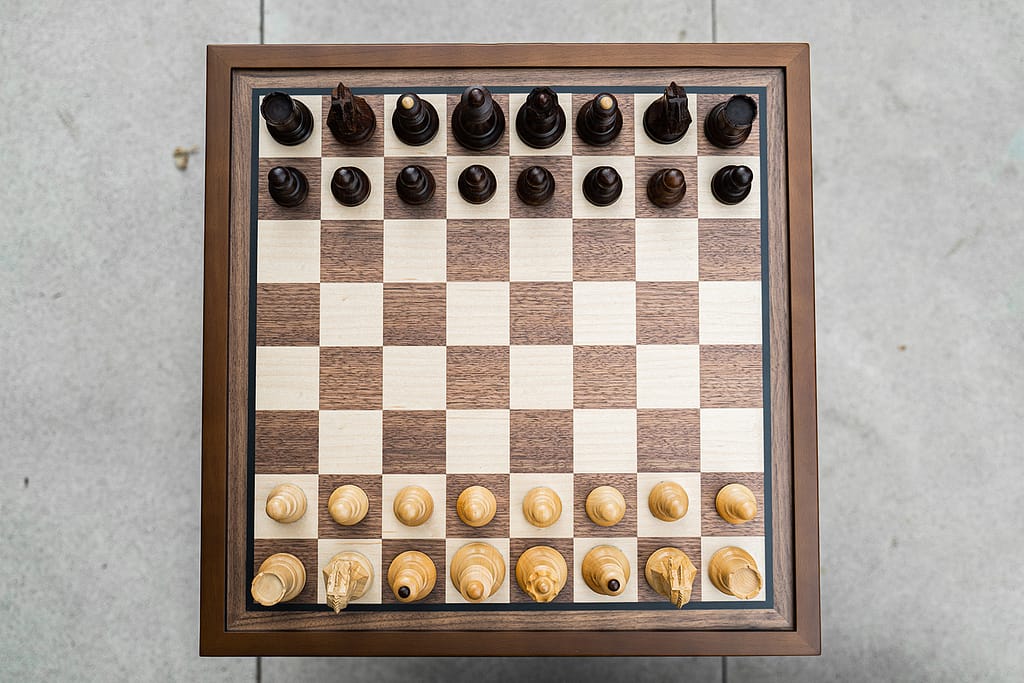
Chessboard Layout:
The board setup – the Queen is always on its own color, and each player’s lower right corner is always a white square.
After setup, it is whites turn. White always moves first.
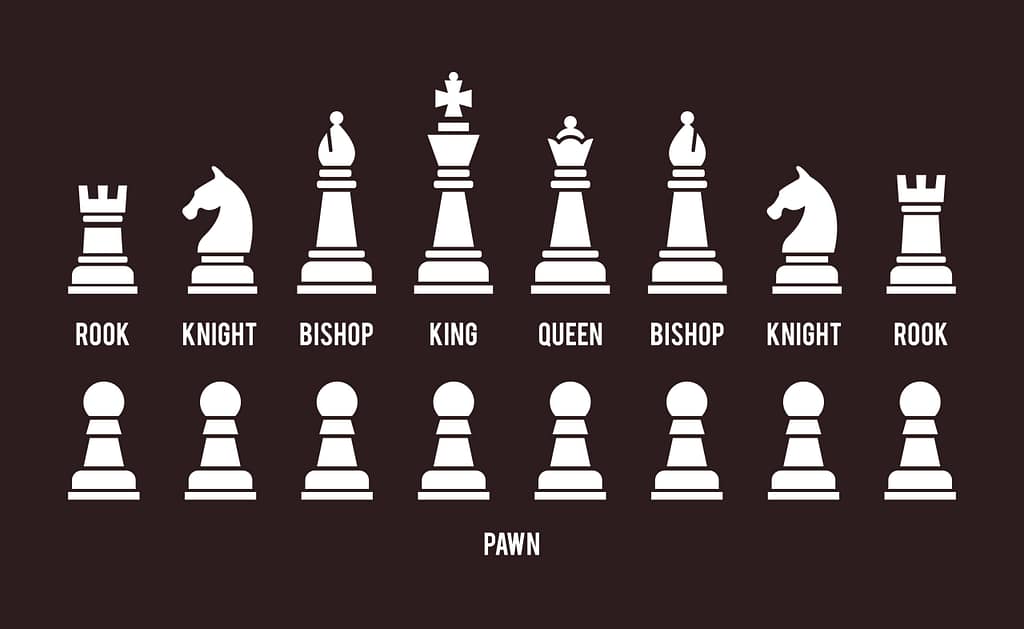
The King can move or capture one square in any direction.
It is also the only piece that cannot move into a square which it can be captured.
When an enemy piece threatens the King (can capture in their next move), it is called a check.
Once a king gets captured or “Checkmate” it is game over.
The Queen can move or capture as far as it wants in any direction — horizontally, vertically, or diagonally
The Rook can move or capture horizontally or vertically. But unlike the queen it lacks the diagonal movement.
The Bishop can move or capture diagonally, similar as the Rook, it lacks the horizontal and vertical movement of the queen.
Due to the diagonal movement, each bishop is forever limited to the color of the square it started with.
The Knight moves the most different than any other piece. It moves and captures on a square that is two squares away in a different color from the one it started on.
Additionally, it can jump over friendly and enemy units through this movement (without capturing those passed pieces).
Most people remember the knight movement by the squares it passes in its movement either as an L-shape, or as a Y-shape.
The Pawn are the foot soldiers of chess. The pawn can move only one square forward, except on the very first move which they can elect to move two squares forward, and then one square thereafter.
The pawn can never move backward.
Although pawns move forward in its normal movement, they cannot capture by going forward; they can only capture diagonally.
Special Moves:
Castling is a move that allows you to place your king on a square that is safe from attack. The only move that allows you to move two pieces at once!
Castling is accomplished by the king moving two squares in either direction in which the rook goes on the other side.
Castling may NOT be played when:
The King is in check
Either the King or the target Rook has previously moved in the game.
Anything in between the Rook and the King of the intended direction
Squares passed over or landed on by the king are under enemy attack or passes through a square that can be a “check”.
Pawn Promotion:When a pawn reaches the enemy back row it can be promoted to any non-king piece of the player’s color. The piece can be a queen, rook, bishop, or knight of the player’s choice.
Capturing En Passant: This is a special capturing movement of a pawn versus another pawn in a specific type of situation. The situation occurs when a pawn that has not moved yet, uses the option to advance two squares on the first move and attempts to pass by the enemy pawn on the adjacent square.
Once this happens the opposing side has the “option” to capture the pawn that just passed it as if it has captured diagonally.